

In This Blog:
If you are dealing with swelling, varicose veins, or just want to keep your legs more energized, compression socks are game changers. But the right fit is important. If they are too tight or uncomfortable, it can worsen the condition instead of managing it, and if they are too loose, that will not work at all. This is why getting the right fit is crucial. In this guide, we will help you understand why the professional fit is important, what to expect during the fitting, the different compression levels available, and how to get the compression socks for wide calves that offer maximum effectiveness.
Featured Products
-
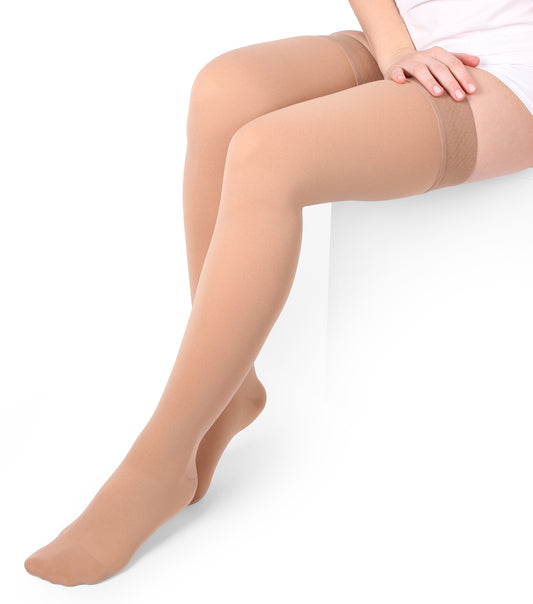
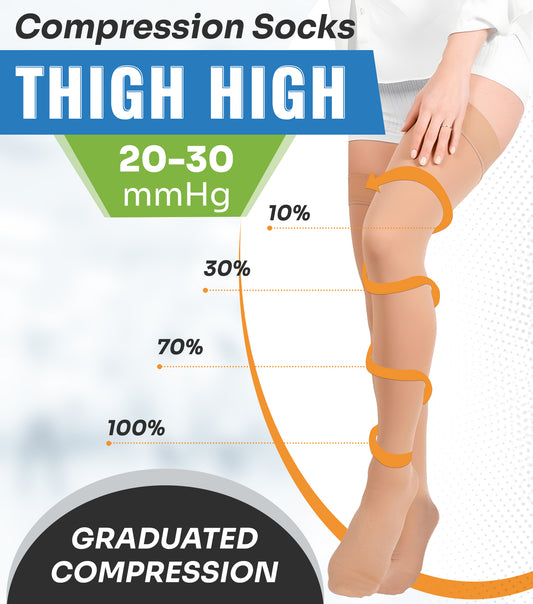
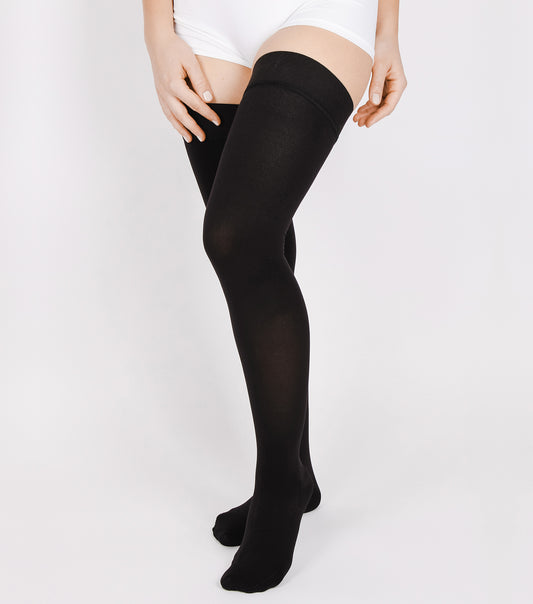
20-30 mmHg Compression Stockings Thigh-High, Closed Toe
Regular price $24.99Regular price Sale price $24.99Unit price -
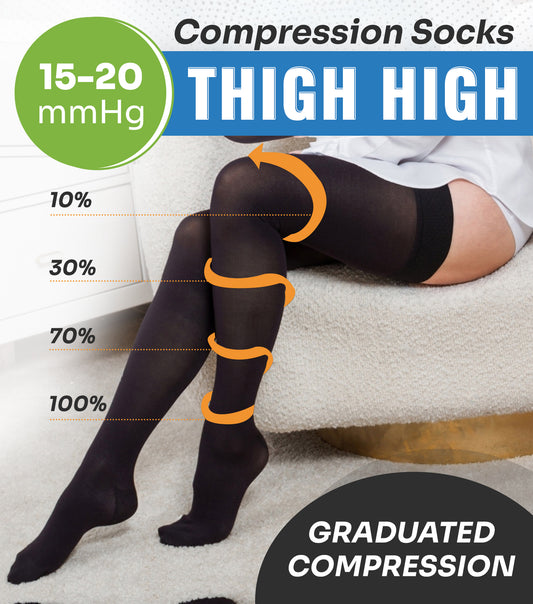
15-20 mmHg Compression Stockings Thigh-high, Closed Toe
Regular price $24.99Regular price Sale price $24.99Unit price
Featured Products
-
20-30 mmHg Compression Socks Knee-high, Closed Toe
Regular price $16.99Regular price Sale price $16.99Unit price -
15-20 mmHg Compression Socks Knee-High, Closed Toe
Regular price $16.99Regular price Sale price $16.99Unit price

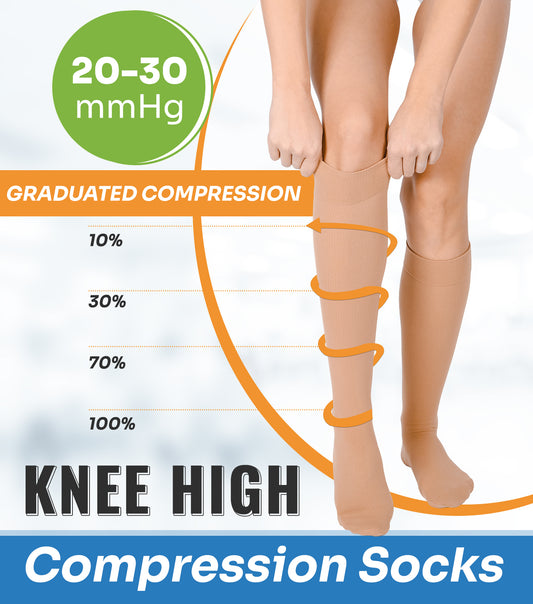


What Are Compression Socks and Why Proper Fit Matters
Compression socks are specialized socks that are designed to gently squeeze your legs and feet. Unlike regular socks, they use graduated compression; that means the pressure applied by these socks is strongest at the ankles and decreases as the socks go up the leg. The aim of engineered pressure is to counteract gravity and help your circulatory system push blood up from the lower extremities back towards the heart. A proper fit of these socks ensures the safety of your compression therapy.
Wearing excessively tight pairs can cause severe discomfort, numbness, tingling, and skin irritation and potentially increase the risk of blood clots. If the socks are too loose or large, they will not put enough pressure to push your blood upwards. This means you will not receive any therapeutic benefits, as blood fluid will still be able to pool in the lower legs. For these garments to work effectively and safely, the compression must match your exact leg measurement. If they are correctly fitted, they provide a firm, comforting squeeze that enhances circulation and minimizes swelling without causing pain.

The Cons of Improper Fit
The tight compression socks will restrict blood flow and cause tissue damage or blood clots, and if they are loose, they don't offer any medical benefits. Excessive localized pressure can lead to nerve injuries, pain, and acute linear tears on the skin. For individuals who are dealing with peripheral artery disease (PAD) or severely reduced blood flow, added pressure can critically restrict the arterial circulation. If you are wondering how to know if they don't fit well, here are some signs you should look for:
- If you are experiencing physical pain, they may not be the right fit for you. Compression socks should not be intended to leave marks or feel painful.
- If you are struggling to take them off, it may be the wrong size, as these socks should be snug, but you shouldn't struggle to take them off.
- If your sock is constantly slipping or bunching, it may be either the wrong size or may have lost its elasticity.
Understanding Compression Levels
Before we move to a perfect fit, you need to choose the compression level that you need. Compression garments come in a medically recognized pressure range measured in mmHg:
- 15-20 mmHg Compression Socks (Moderate) - Ideal for everyday use, pregnancy, and mild swelling
- 20-30 mmHg Compression Socks (Firm) - Varicose vein post-surgery support, moderate edema
- 30-40 mmHg (Extra Firm) - This compression level is medically prescribed and used for severe venous issues.
How to Achieve the Perfect Fit That Doesn't Pinch
To get the right size of wide calves compression socks, you must focus on accurate sizing, appropriate pressure, and physical verification. Here is how to find a perfect fit

1. Measure First
If you need to achieve the perfect fit of compression socks, you need to ensure effective support and maximum comfort. To do this, you must take your physical measurements correctly, use graduated pressure, and position the garment correctly on your legs.
2. Check The Sizing Matrix
Do not rely on the size of your shoes. To find the exact size, measure the circumference of your ankle at its narrowest point above the bone and your calf at its widest point. Match these measurements directly to the sizing, as it can be varied by the brand.
3. Opt for Graduated Pressure
Select the graduated pressure stocking for optimal circulation. These socks are engineered to apply maximum tightness at your ankle, progressively easing as the socks go up the leg. The upward pressure forces the blood towards the heart and prevents swelling.
4. The Two-Finger Rule
It is important to have a properly fitted compression garment so that it doesn't lead to a critical blood clot. The easiest way to check is the two-finger rule. The top band of your socks must sit exactly two finger widths below the crease at the back of your knee. Additionally, don't ever fold the band down.
SNUG360 Compression Socks - Find Your Perfect Fit
Finding the right size is significant because if the socks are too tight, they will restrict the blood flow, and if they are too loose, they will fail to provide gradient pressure, entirely voiding the purpose of the socks. If you are searching for compression socks for wide calves, SNUG360 compression socks come in a range of sizes, compression pressures, and lengths. Our compression socks provide graduated pressure that helps boost circulation, relieve swelling, and reduce leg fatigue. Measure your ankle and calf circumference and refer to our size chart for the correct fit. Check out our range of compression socks and explore available sizing options that are perfect for you.